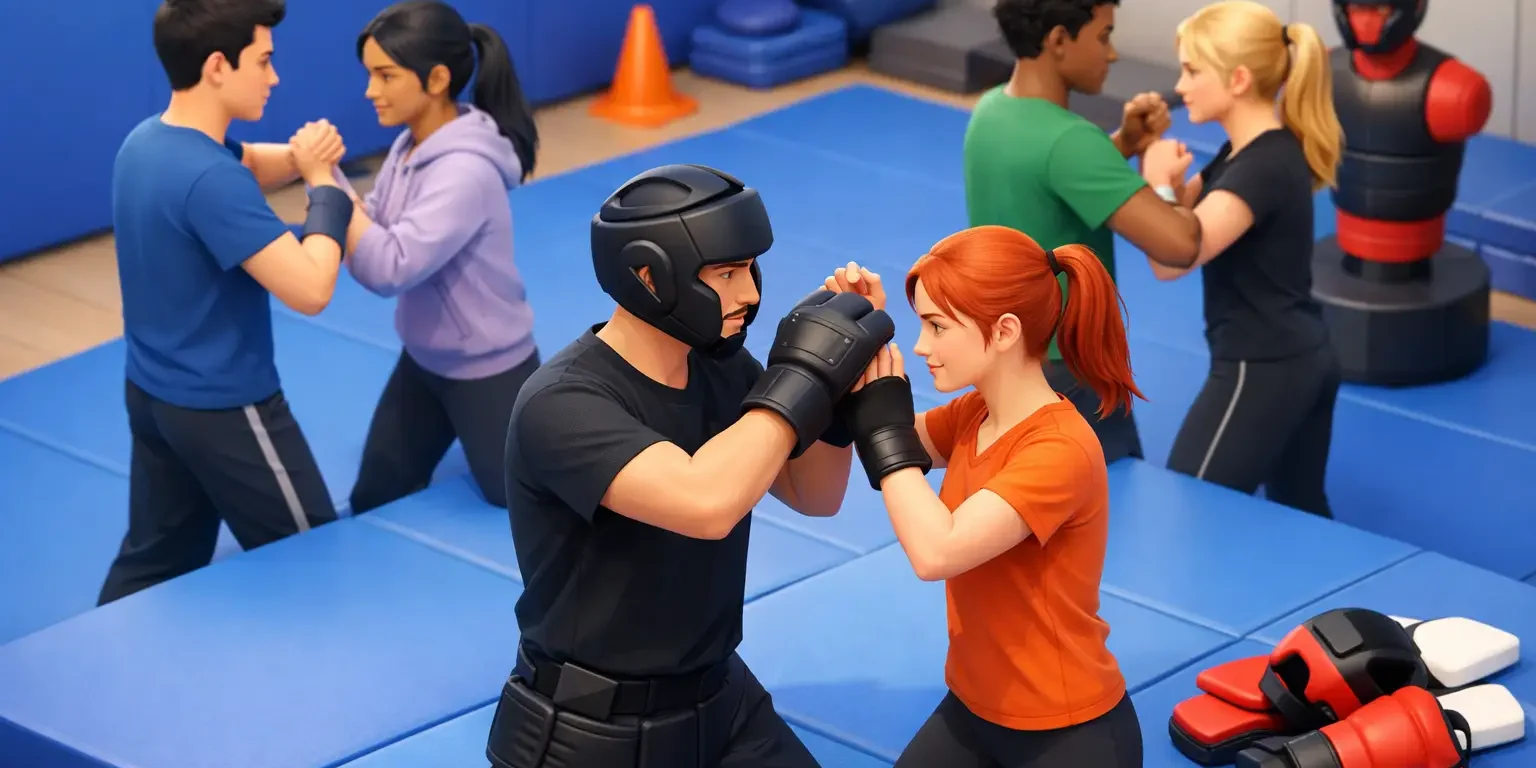
A teen does not need to win a fight to be safer. They need to recognize when a situation is changing, use a confident voice, create space, and know when to leave. That is the foundation of how teens learn practical self defense in a positive martial arts setting: not fear, not bravado, but calm choices under pressure.
For many parents, the concern is familiar. A teen may be walking to a car after practice, navigating a crowded school hallway, meeting new people online, or dealing with an uncomfortable social situation. Practical self-defense training gives them more than a few physical moves. It gives them a repeatable process for noticing risk, setting boundaries, and getting help.
Practical Self Defense Starts Before Contact
The best self-defense skill is avoiding the physical confrontation whenever possible. Teens benefit from learning that awareness is not the same as being afraid. It means paying attention to their surroundings, trusting an uneasy feeling, and making choices that keep options open.
In class, this can look simple: keeping a phone charged, walking with friends when possible, noticing exits in unfamiliar places, and avoiding distractions when moving through a parking lot or waiting for a ride. These habits are practical because they fit real life. A teen should not feel responsible for preventing someone else’s harmful behavior, but awareness can help them respond sooner and move toward safety.
Students also learn that distance matters. If a person is making them uncomfortable, stepping back, moving toward other people, or putting an object such as a table or car between them can create valuable time. The goal is not to stay and prove confidence. The goal is to get away safely.
How Teens Learn Practical Self Defense in Class
Good training turns a stressful subject into manageable skills. Rather than asking teens to memorize a long sequence of techniques, instructors introduce concepts, practice them carefully, and revisit them often. Repetition matters because a student may not have time to think through every detail during an unexpected situation.
They practice a confident presence
Confidence is not about acting tough. A confident posture, steady eye contact when appropriate, and a clear voice can communicate that a teen is alert and willing to draw attention to a problem. Students practice simple boundary statements such as, “Stop,” “Back up,” or “I said no.” The words should be direct, loud enough to be heard, and appropriate to the situation.
This practice can be especially helpful for teens who tend to freeze, apologize automatically, or worry about seeming rude. Respect is a core value, but respect does not require accepting intimidation, unwanted touching, harassment, or pressure. Teens need permission to protect their personal space.
They learn to move, escape, and seek help
Physical self-defense instruction should focus on high-percentage actions that support escape. Teens learn balance, body positioning, how to make space, and how to move quickly toward safety. They may practice responding to common grabs or holds in a controlled setting, always with an emphasis on breaking free rather than continuing the conflict.
A responsible program also teaches what happens immediately afterward: run to a safe location, call a trusted adult or emergency services when needed, and tell someone what happened. Teens should understand that getting help is a strength. They do not need to handle a serious situation alone.
They train with control and respect
Martial arts training gives students a safe place to experience pressure without chaos. Partners work at an appropriate level, instructors correct technique, and clear rules protect everyone in the room. A teen learns how their body moves, how to stay balanced, and how to remain composed when another person is close or unpredictable.
That structure is one reason martial arts can be more valuable than a one-time self-defense seminar. A single workshop may introduce useful ideas, but ongoing classes allow students to build skill, fitness, judgment, and confidence over time. Progress comes through regular practice, not through a promise of instant expertise.
The Role of Conflict Resolution
Not every threat begins with a stranger. Many difficult moments for teens involve friends, classmates, teammates, or people they see regularly. That is why practical self-defense includes communication and conflict resolution.
Students should learn to pause before reacting to an insult, rumor, social media comment, or challenge. Walking away can feel difficult when peers are watching, yet it is often the strongest choice. A teen who can leave, find an adult, or use a firm boundary is protecting both their safety and their future.
There are times when leaving is not immediately possible. In those moments, the priority remains creating an opening to escape and get help, not punishing the other person. This distinction matters. Self-defense is about safety, while fighting is about continuing a conflict.
Parents can reinforce this lesson at home by asking practical questions: Who could you call if you felt unsafe? Where is a safe place near school, practice, or work? What words could you use if someone would not respect your space? These conversations do not need to be frightening. They help teens make a plan before they need one.
Why Age-Appropriate Training Matters
Teenagers are not younger children, but they are not adults with years of experience either. They are developing strength, independence, social awareness, and decision-making skills at the same time. The right program treats them with respect while giving them clear structure.
A beginner-friendly class should explain why a skill works, not just demand that students copy it. It should challenge students physically without making them feel embarrassed for being new. It should also make room for different goals. One teen may join to feel safer walking home from school. Another may want fitness, focus, or a positive peer group. All of those goals belong in the training room.
For some students, sparring can be a useful part of martial arts development because it teaches timing, distance, control, and emotional regulation. It is not the same as self-defense, though. Sparring has rules, protective equipment, and an agreed-upon start and stop. A quality instructor helps teens understand the difference so they do not confuse sport skills with real-world judgment.
What Parents Should Look For in a Self-Defense Program
The instructor and class culture matter as much as the techniques being taught. Look for a program that emphasizes safety, supervision, respectful partner work, and non-violent conflict resolution. Students should never be pressured to prove themselves through unsafe contact or treated as though fear is weakness.
It also helps to choose a school with a clear progression. When teens earn goals through consistent effort, they see that confidence is built, not handed out. Belts, curriculum, and regular feedback can give students a meaningful path while reinforcing discipline, listening skills, and accountability.
At ATA Integrity Martial Arts, teen students train in a structured environment designed to build practical skills alongside respect, self-control, and personal confidence. The purpose is not to create aggressive students. It is to help young people become capable, thoughtful, and prepared.
Skills That Carry Into Everyday Life
The benefits of practical self-defense often show up outside class first. A teen who practices speaking clearly may participate more confidently at school. A student who learns to stay calm during drills may handle a tense conversation with more control. A young person who sees steady progress through training may become more willing to set goals and follow through.
There is no training program that can remove every risk from life. What it can do is give teens tools, practice, and a supportive community so they are less likely to feel helpless when a situation feels wrong. Start with a class where your teen can ask questions, learn at their pace, and discover that real confidence is calm, respectful, and ready to act when safety requires it.