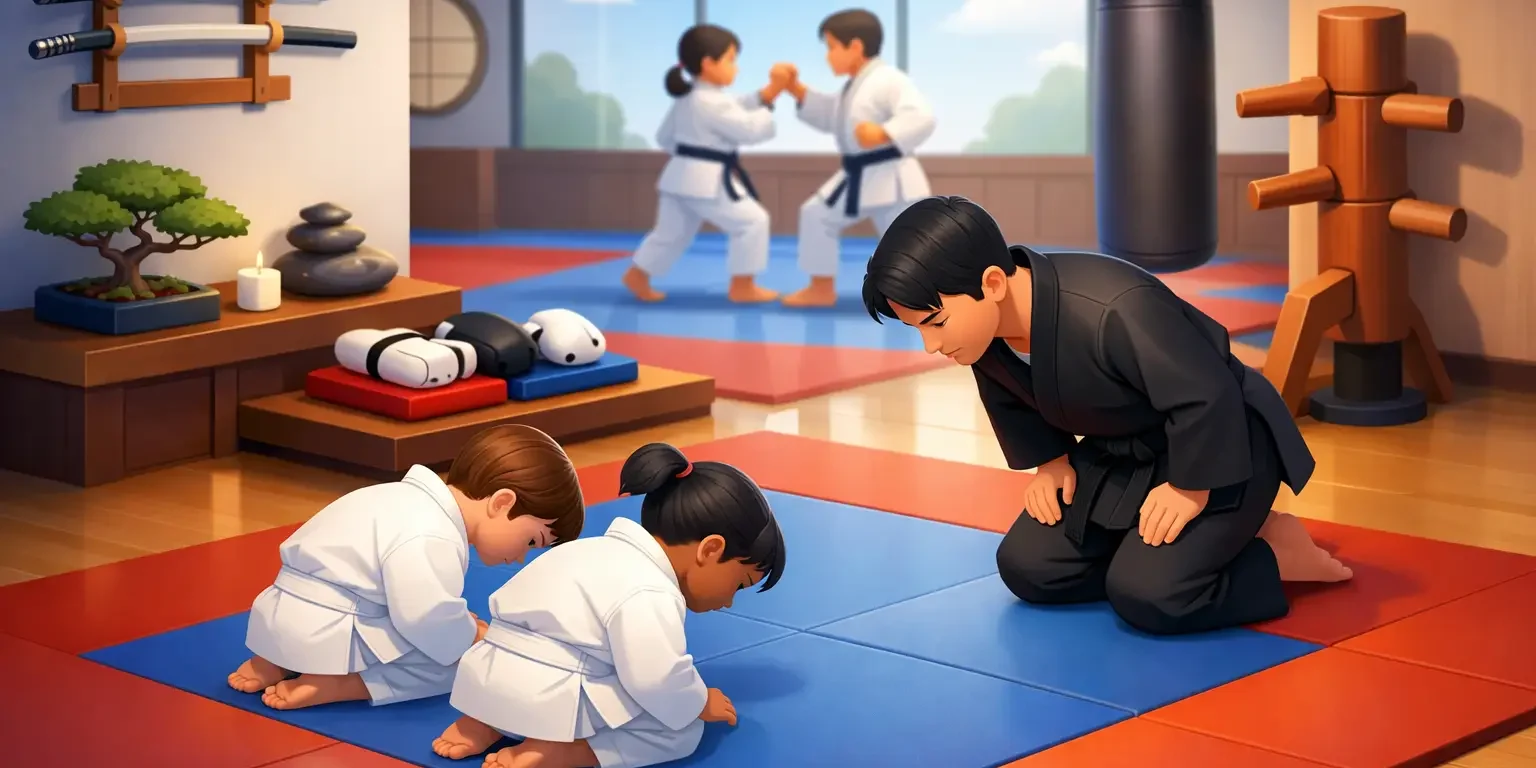
A child bows before stepping onto the mat. A teen waits quietly for instruction instead of talking over a coach. An adult partner pulls a kick short to keep training safe. These small moments show how martial arts teaches respect in a way that is practical, visible, and consistent.
For many families, respect can feel like a hard lesson to teach because it is easy to say but harder to practice. Martial arts helps bridge that gap. Instead of treating respect as a vague idea, training turns it into daily behavior. Students learn how to listen, how to respond, how to manage frustration, and how to treat other people with care even when a challenge feels difficult.
How martial arts teaches respect from the first class
Respect in martial arts does not begin with advanced techniques. It starts with the structure of class. Students line up, greet instructors properly, and follow directions in a set order. That routine matters because it teaches that the training space is shared and that everyone in it has a role.
For younger students, this kind of structure is especially useful. Children often do well when expectations are clear and consistent. They begin to understand that respect is not just about saying “yes, ma’am” or “yes, sir.” It also means waiting their turn, keeping hands to themselves, paying attention, and giving their best effort.
Teens and adults learn the same lesson in a different form. Respect shows up in punctuality, focus, and willingness to be coached. It means not letting ego control the room. A student may be strong, athletic, or experienced, but progress still depends on being teachable.
Respect is learned through action, not just words
One reason martial arts is so effective is that it gives students repeated chances to practice respectful behavior. A lecture on manners can be forgotten by the end of the day. A class built on discipline and repetition leaves a stronger impression.
When students partner up, they have to be aware of another person’s safety. When they spar, they must control their speed and power. When they make a mistake, they learn to correct it without blaming others. These are not side lessons. They are part of the training itself.
This matters because real respect is not passive. It requires self-control. A student who can stop a strike before it lands too hard is showing respect. A student who loses a round and still thanks their partner is showing respect. A child who feels disappointed but stays composed is building a skill that carries into school, home, and friendships.
Respect for instructors, parents, and peers
Martial arts creates a clear chain of accountability, and that helps students understand respect in different relationships.
Instructor respect is often the most obvious. Students listen when an instructor speaks, follow corrections, and recognize that guidance comes from experience. This is not about fear or blind obedience. In a healthy school environment, it is about trust. Students learn that coaching is meant to help them improve, not embarrass them.
Respect for parents often grows alongside training. Children who are practicing discipline in class are more likely to understand why rules exist at home. That does not mean martial arts instantly fixes every behavior issue. Growth takes time, and every child is different. But many parents notice that structured training gives them a language for conversations about attitude, responsibility, and effort.
Peer respect may be the most valuable lesson of all. Students train with people of different ages, personalities, and ability levels. They learn that a newer student deserves encouragement, not teasing. They learn that a stronger student should use control, not dominance. They learn that everyone starts somewhere and that progress looks different for each person.
Why discipline and respect are closely connected
Respect without discipline is fragile. It may show up when things are easy, then disappear when someone feels tired, frustrated, or challenged. Martial arts strengthens respect by tying it to habits.
A student repeats forms, drills, and combinations over time. They work through corrections. They keep showing up even when progress feels slow. That discipline teaches patience, and patience supports respectful behavior. People are more likely to interrupt, argue, or act carelessly when they cannot regulate themselves.
This is one of the reasons martial arts can be so helpful for children who need better focus or stronger listening skills. It gives them a place to practice staying engaged, following a sequence, and recovering after mistakes. Those same habits can support better behavior in classrooms and at home.
For adults, the connection is just as real. Respect in training often means leaving stress at the door, staying present, and being a good training partner. Physical skill matters, but character matters too. A disciplined student creates a safer and more positive class for everyone.
How martial arts teaches respect without encouraging passivity
Some parents worry that teaching respect might make a child too quiet or too compliant. That is a fair concern, especially if respect is confused with simply never speaking up. Good martial arts instruction should not teach passivity. It should teach self-control, confidence, and appropriate response.
A respectful student can still be assertive. In fact, confident respect is stronger than forced politeness. Children learn that they can speak clearly, hold boundaries, and respond to conflict without being rude or aggressive. Teens and adults learn that respect includes protecting themselves and others when necessary.
That balance matters. Non-violent conflict resolution is often the first goal, but martial arts also teaches that being respectful does not mean accepting harmful behavior. Students learn to read situations, stay calm, and make better decisions under pressure.
Respect grows through challenge
It is easy to be respectful when everything is going your way. The harder test comes when a student feels tired, loses a match, gets corrected, or struggles to learn a skill. Martial arts puts students in those moments regularly, and that is part of its value.
A child may feel frustrated when a belt requirement takes longer than expected. A teen may need to work with a partner they would not normally choose. An adult may realize that fitness or coordination needs improvement. In each case, the challenge creates an opportunity. Students can react with impatience and excuses, or they can respond with humility and effort.
This is where long-term training makes a difference. Respect is not built in one class. It develops over months and years as students face small setbacks and learn to handle them well. That process often leads to maturity that shows up far beyond martial arts.
The role of community in teaching respect
Respect is easier to learn when it is reinforced by a strong community. In a supportive school, students see older belts helping newer ones. They see instructors setting clear expectations and modeling calm leadership. They see families encouraging progress rather than comparing children.
That environment shapes behavior. Kids notice what is praised. Teens notice what is tolerated. Adults notice whether the culture is centered on growth or ego. A school that values courtesy, accountability, and encouragement gives students more than a workout. It gives them a standard.
This is one reason many families choose structured martial arts programs rather than activities with less personal guidance. A well-run class does more than keep students busy. It helps them grow into people who can lead, listen, and contribute positively to the people around them.
At ATA Integrity Martial Arts, that kind of respectful culture is part of what makes training meaningful for children, teens, adults, and families alike. Students are not only learning techniques. They are learning how to carry themselves with confidence and consideration.
What respect looks like off the mat
The goal is not perfect behavior in every moment. No child, teen, or adult gets everything right all the time. The real goal is progress that carries into daily life.
For a young child, that may look like better listening at school or more patience with siblings. For a preteen, it may mean handling disappointment without a meltdown. For a teen, it may show up as stronger self-control in social situations. For an adult, it may mean improved composure under stress and greater awareness of how their actions affect others.
These changes are meaningful because they are practical. Respect is not just a value posted on a wall. It becomes something students know how to do. They learn to show up prepared, treat others well, take correction, and respond with maturity when things get hard.
That kind of growth does not happen by accident. It happens when students train in an environment that expects the best from them, supports them through the process, and gives them regular chances to practice what respect really looks like. For families looking for more than an after-school activity, that is where martial arts can make a lasting difference.