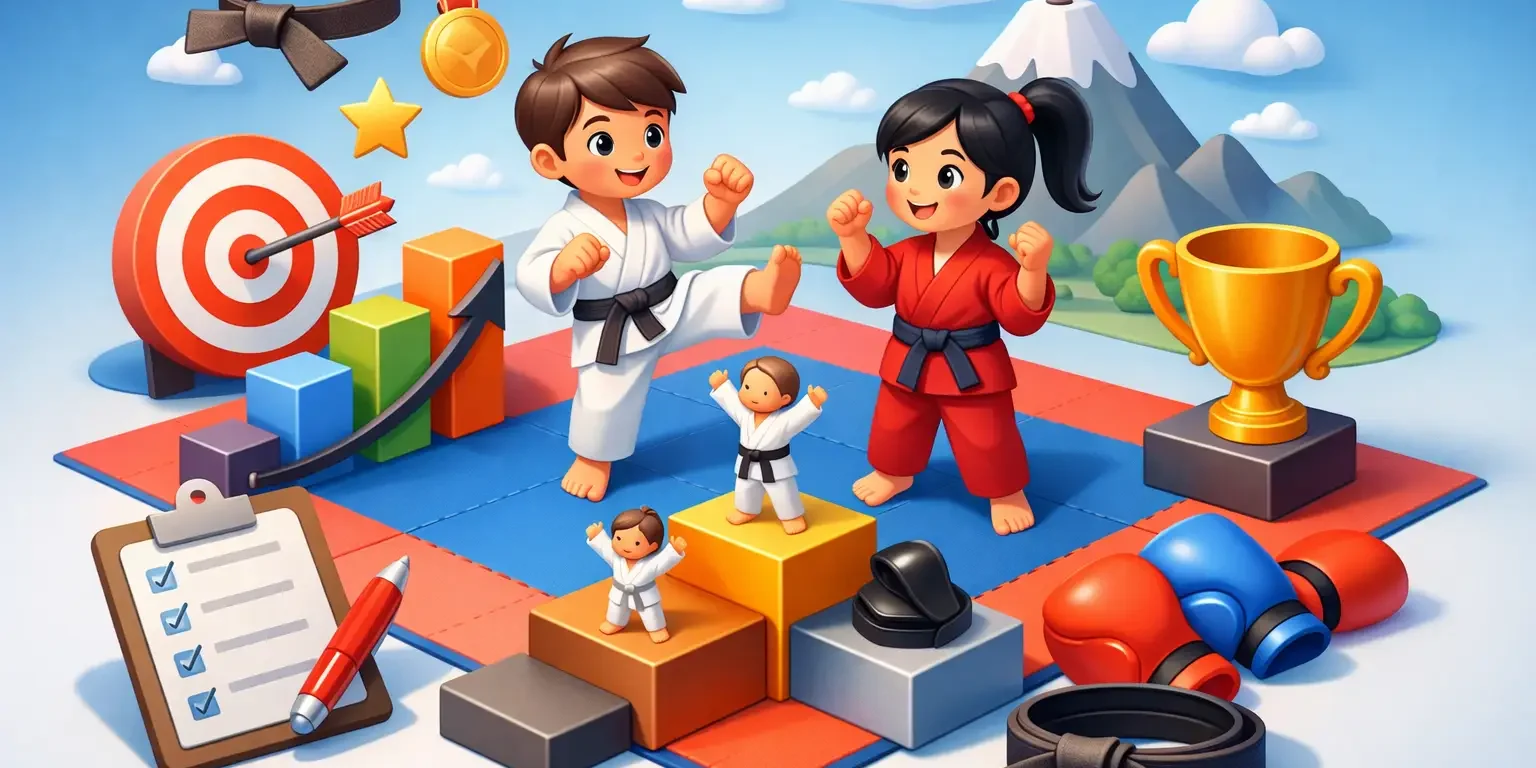
One week your child is excited about earning their next belt. The next week, they are frustrated because a kick feels awkward or a form is hard to remember. That is exactly why martial arts goal setting for kids matters. Clear goals give children something steady to work toward, even when progress feels slow, and they help parents see that growth is about much more than the next stripe or belt.
In martial arts, the best goals are not just about performance. They also shape habits, attitude, and character. A child who learns to bow with respect, listen the first time, practice with effort, and keep going after a mistake is building skills that carry into school, home, and friendships. That is one reason martial arts has such a lasting impact when the training is structured well.
Why martial arts goal setting for kids matters
Kids usually do better with a target they can understand. “Try your best” is a nice message, but it can be too vague. “Keep your guard up during sparring drills this week” or “practice your form for five minutes three times before class” gives them something concrete.
That structure builds confidence in a realistic way. Instead of needing constant praise, children start to recognize their own progress. They notice that they are stronger than they were last month, more focused than they were at the start, and better able to stay calm when something is difficult.
Goal setting also teaches patience. Martial arts is a long-term activity. Belts are earned over time, not handed out because a child had one good day. That process can be challenging, especially for younger students who want quick results. With the right goals, they learn that progress comes from consistency.
What good goals look like in martial arts
A good martial arts goal should be specific enough for a child to understand and achievable enough that effort leads to success. If the goal is too easy, it does not inspire growth. If it is too big, children can feel defeated before they begin.
For younger children, goals usually work best when they are simple and immediate. They might focus on standing still in line, using a strong voice during responses, or remembering to show respect at the beginning and end of class. These may sound small to adults, but for a 4- or 5-year-old, they are meaningful milestones.
For elementary-age students, goals can become a little more layered. They may work on improving a specific skill, such as balance in kicks or memorization in forms, while also focusing on behavior-based goals like listening, self-control, or showing leadership in class.
The key is matching the goal to the child’s age and stage. A child who is brand new to martial arts needs a different target than a child who has already been training for a year. It depends on maturity, personality, and how they respond to challenge.
Performance goals and character goals
The healthiest approach usually includes both. Performance goals help students improve technically. Character goals help them grow personally.
A performance goal might be earning the next belt, improving a side kick, or completing a form with fewer corrections. A character goal might be staying focused for the full class, showing respect without reminders, or handling mistakes without tears or frustration.
When parents focus only on rank, kids can start to believe the belt is the only thing that matters. When the process is valued too, children learn that discipline and attitude are part of success.
How parents can support martial arts goal setting for kids
Parents do not need to be martial arts experts to help. In fact, the most helpful role is often simple encouragement paired with consistency.
Start by keeping goals short and visible. Younger children do well when the goal is easy to repeat. “This week, we are working on listening fast” is better than a long speech about personal development. Older kids can handle a little more detail, especially if they help choose the goal themselves.
It also helps to ask better questions after class. Instead of only saying, “Did you have fun?” or “When is your next belt test?” try asking, “What did you improve today?” or “What is one thing you want to do better next class?” That keeps attention on growth.
At home, support should be steady, not intense. A short practice session is usually better than turning the living room into a second classroom. Kids benefit from repetition, but too much pressure can drain the joy out of training. A few focused minutes on stances, a form, or basic kicks can be enough.
Praise effort honestly. Children can tell the difference between encouragement and empty compliments. “I noticed you stayed with it even when that was frustrating” is more powerful than “You are amazing at everything.” Specific feedback teaches them what success actually looks like.
When a child loses motivation
This happens, even with kids who love martial arts. Sometimes school gets busy. Sometimes progress feels slower. Sometimes a child compares themselves to someone more advanced and gets discouraged.
When motivation dips, it usually helps to shrink the goal instead of pushing harder. A child who feels overwhelmed by earning the next belt may respond better to a smaller target like remembering one section of a form or improving class focus for the week. Small wins rebuild momentum.
It is also worth paying attention to whether the goal still fits. Some children are energized by achievement. Others respond more to routine, belonging, or encouragement from instructors and classmates. Good goal setting is not one-size-fits-all.
Age-appropriate goal ideas
For younger students, goals often center on classroom habits. They may work on eye contact, taking turns, following directions, or using self-control during drills. These goals support success not only in martial arts, but also in preschool and early elementary settings.
For kids ages 7 to 12, goals can include both skill development and personal responsibility. A student might aim to improve a certain technique, practice at home twice a week, or demonstrate leadership by helping newer students feel welcome. At this age, children often begin to take more pride in measurable progress.
Some goals are seasonal. Before a belt test, a child may focus on memorization and confidence. During a busy school period, the better goal may be simply staying consistent with attendance and effort. There is value in both. The right goal is the one that supports healthy progress now.
The role of instructors and a structured program
Children thrive when expectations are clear. In a well-run martial arts school, goal setting is built into the student experience. Students know what they are working toward, what skills are required, and what attitudes matter along the way.
That structure is especially helpful for parents. You should not have to guess whether your child is progressing. Strong instruction gives children a path they can follow and gives families a framework for encouragement at home.
At ATA Integrity Martial Arts, that kind of progress is part of the training experience. Students are challenged in age-appropriate ways, and goals go beyond physical techniques to include focus, respect, perseverance, and confidence. For many families, that balance is exactly what makes martial arts such a valuable activity.
Helping kids build goals that last
The most effective goals are the ones children begin to own for themselves. At first, a parent or instructor may lead the process. Over time, students learn to reflect, adjust, and take pride in steady improvement.
That is a powerful life skill. A child who learns how to work toward a goal in martial arts is also learning how to handle school challenges, friendships, setbacks, and responsibilities. They begin to understand that success is not random. It comes from showing up, listening, practicing, and staying with it.
Not every class will feel exciting. Not every technique will come easily. That is part of the value. Martial arts gives children a safe place to struggle, improve, and grow stronger in more ways than one.
If you are thinking about goals for your child, start small, stay consistent, and look beyond the belt. The confidence you want to see usually grows one focused class, one practiced skill, and one good habit at a time.