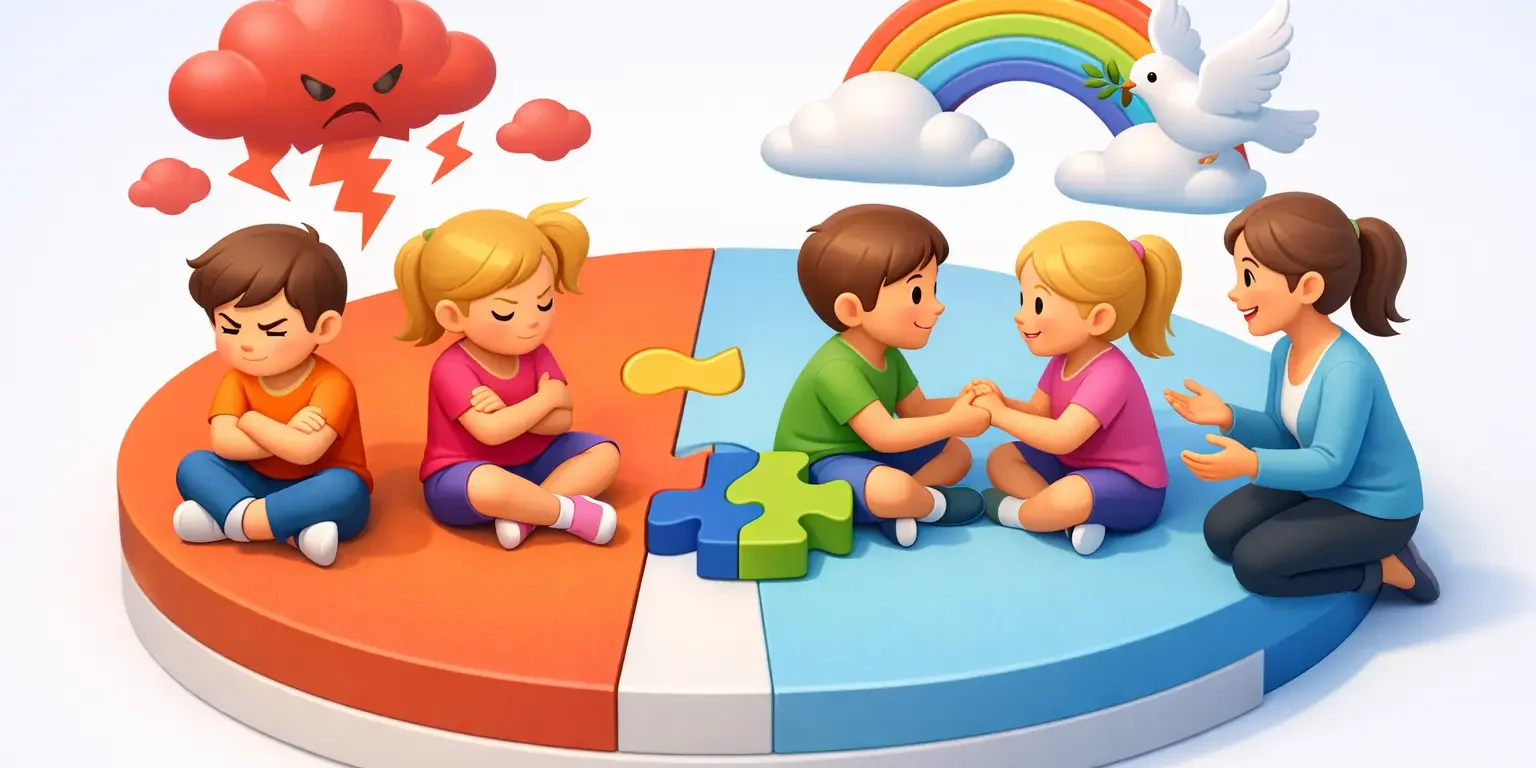
A child comes home upset because someone cut in line, took a turn on the swings, or said something hurtful at lunch. The instinct may be to tell them to stand up for themselves. That matters. But standing up for yourself does not have to mean yelling, shoving, or trying to get even. Non violent conflict resolution for kids gives children a better option: the confidence to respond calmly, clearly, and safely.
At ATA Integrity Martial Arts, we believe children can be both kind and strong. They can set boundaries without becoming aggressive. They can ask for help without feeling weak. These are skills that support them at school, at home, on the playground, and throughout life.
Why Kids Need Conflict Skills, Not Just Rules
Most children are still learning how to name big feelings, read social situations, and control their reactions. When they feel embarrassed, excluded, frustrated, or afraid, their bodies may react before they have time to think. A pushed backpack, a shouted insult, or a disagreement over a game can escalate quickly.
Rules such as “keep your hands to yourself” are necessary, but they do not always tell a child what to do next. A child needs a simple, practiced response they can remember when emotions are high. They need to know how to use a firm voice, create space, and find a trusted adult when a problem is more than they can handle alone.
That is where structured practice makes a difference. Children learn best when adults demonstrate a skill, let them rehearse it, and reinforce it consistently. The goal is not to expect perfect behavior every time. The goal is to help a child make a safer choice more often and recover more quickly when they make a mistake.
What Non Violent Conflict Resolution for Kids Looks Like
Nonviolent conflict resolution is not about telling children to ignore hurtful behavior or accept unfair treatment. It is about responding with control instead of reacting with aggression. Depending on the situation, a child may use words, walk away, set a boundary, or seek adult support.
A helpful starting point is teaching children to pause before they act. This can be as simple as taking one breath, putting their hands by their sides, and asking themselves, “What can I do that keeps everyone safe?” A pause creates room for a better choice.
Next, encourage clear, respectful language. Short phrases are easier for children to use under pressure: “Stop. I don’t like that.” “Please give me space.” “I was using that first.” “Let’s take turns.” The child does not need a long speech. They need a calm voice and words that communicate a boundary.
If the other child responds and the problem can be solved, great. If the behavior continues, becomes physical, or involves threats, the next step is to move away and tell a trusted adult. Walking away is not giving up. It is choosing safety and self-control.
Teach the Difference Between Everyday Conflict and Unsafe Behavior
Not every disagreement requires the same response. A debate over game rules may be solved with compromise. Repeated teasing, threats, exclusion, or physical contact require more support.
Parents can help by explaining that ordinary conflict happens when two people want different things or make mistakes. Children may need to listen, apologize, take turns, or agree on a fair solution. Bullying is different because it involves repeated harm, a power imbalance, or behavior intended to intimidate. Children should never be expected to solve bullying on their own.
This distinction matters because some kids are quick to report every small disagreement, while others stay silent about serious problems. Teach them that they can try respectful words for a normal conflict. But if they feel unsafe, if someone will not stop, or if the behavior keeps happening, they should tell an adult right away.
Simple Practice at Home Builds Real Confidence
Children are far more likely to use conflict-resolution skills if they have practiced them before a stressful moment. A few minutes of role-playing at home can make a big difference.
You might act out a common situation: a sibling grabs a toy, a classmate refuses to share, or someone makes an unkind comment. Ask your child what they could say. Let them practice standing tall, looking forward, and speaking clearly. Keep it encouraging, not like a test.
It also helps to practice the physical side of calm behavior. Children can learn to take a breath, relax their shoulders, keep their hands open, and step back to create space. These small actions send a message to their own body: “I am in control.”
When your child uses even part of the skill in real life, notice it. Instead of only asking whether they won the disagreement, ask questions such as, “How did you keep yourself safe?” or “What words did you use?” Positive reinforcement helps children connect self-control with success.
How Martial Arts Supports Peaceful Problem-Solving
Some parents wonder whether martial arts might encourage fighting. In a quality program, the opposite is true. Martial arts teaches students that physical skills come with responsibility. Students learn that self-defense is about protection, awareness, and safety, not proving toughness or settling everyday arguments.
A structured martial arts class gives children repeated opportunities to practice listening, waiting their turn, following directions, and controlling their bodies. They learn to stay focused even when they are excited or frustrated. They also experience progress through effort, which can build the confidence that prevents many conflicts from becoming physical in the first place.
Confidence does not mean a child will never feel nervous or upset. It means they begin to trust that they can handle a difficult moment without losing control. A child who feels capable is often less likely to lash out, and more likely to use a strong voice or ask for help.
Respect is equally important. In martial arts, students practice respect for instructors, training partners, parents, and themselves. That does not mean accepting disrespect from others. It means responding with discipline and making choices that reflect good character.
When a Child Struggles to Stay Calm
Some children need more time and support to use these skills. Age, personality, sensory needs, stress, fatigue, and past experiences can all affect how a child reacts to conflict. A young child may cry or freeze. Another may become loud and physical before they can explain what is wrong.
Avoid labeling a child as “bad,” “dramatic,” or “a fighter.” Instead, focus on the behavior and the next skill to practice. You might say, “It makes sense that you were angry. Hitting was not safe. Let’s practice what you can do next time.” This approach holds the boundary while showing your child that they are capable of learning.
If conflict is frequent, ask teachers, caregivers, or instructors what they observe. Consistent language between home, school, and activities gives children a clearer path. For ongoing aggression, anxiety, bullying, or major changes in behavior, additional guidance from a qualified child professional may be helpful.
Give Kids Words They Can Carry With Them
The strongest conflict-resolution lessons are simple enough to remember in the moment: stop, breathe, use your words, move away, and get help when needed. Repeating these steps at home and reinforcing them in positive environments helps children turn good advice into a real habit.
Every child will face conflict. What they learn from those moments can shape how they see themselves and others. When children know they can be calm, respectful, and firm, they carry a kind of strength that reaches far beyond the playground.