A child who hangs back at birthday parties, speaks softly in new groups, or worries about being called on is not doing anything wrong. Many children need more time and the right setting to feel comfortable participating. That is where how martial arts helps shy children becomes especially meaningful: a well-run class gives them a predictable place to practice courage without asking them to become someone they are not.
For many families, the goal is not to turn a quiet child into the loudest voice in the room. It is to help that child make eye contact when speaking, try a new skill after a mistake, introduce themselves to a classmate, and trust their own abilities. Martial arts can support those small, powerful changes through structure, movement, and steady encouragement.
Confidence Starts With Small Wins
Shy children often notice every unfamiliar detail. A new activity can feel overwhelming when there are new adults, new rules, and other children who appear more comfortable. Martial arts classes reduce some of that uncertainty by following a consistent format. Students line up, bow in, warm up, practice techniques, and work toward clear goals.
That routine matters. When children know what comes next, they can spend less energy worrying and more energy learning. A student may begin by standing quietly in line and following along. Soon, they may volunteer to demonstrate a stance, answer a question aloud, or lead a short drill. Progress does not have to be dramatic to be real.
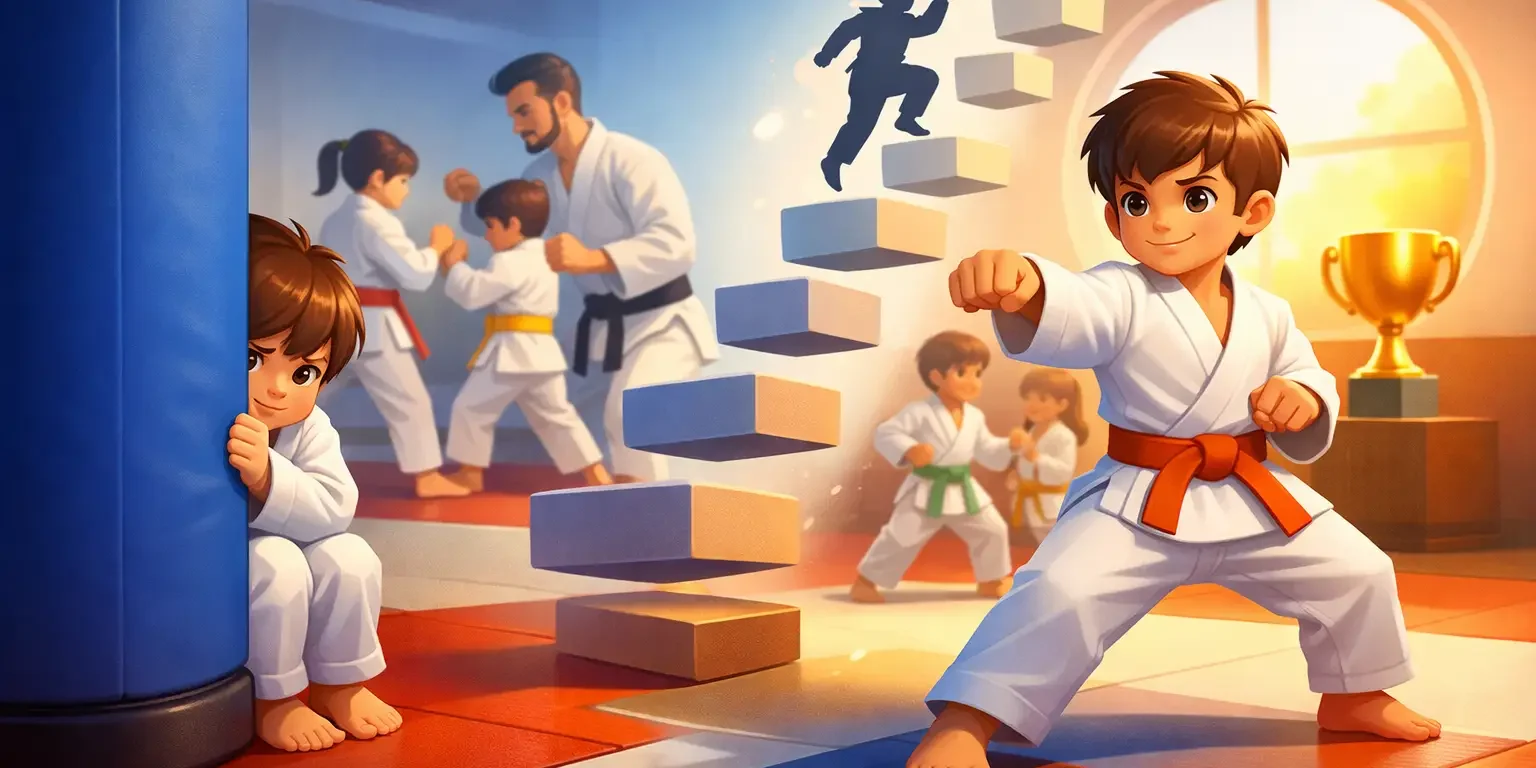
Martial arts also makes achievement visible. Learning a new block, remembering a form, or earning a stripe gives children evidence that effort pays off. Belt progression provides long-term direction, but the confidence often begins earlier – with the moment a child realizes, “I could not do that last week, and now I can.”
How Martial Arts Helps Shy Children Speak Up
A respectful martial arts class gives children regular, low-pressure chances to use their voices. They may respond to an instructor, count during an exercise, say a school value, or introduce themselves to a partner. These moments are brief and supported, which is very different from being unexpectedly put on the spot in a large group.
Over time, speaking becomes part of the routine rather than a major event. Children learn that they can feel nervous and still participate. That lesson carries beyond the training floor. A child who becomes comfortable answering “Yes, sir” or “Yes, ma’am” with a clear voice may find it easier to greet a teacher, ask for help at school, or order for themselves at a restaurant.
The goal is never to force a child to perform before they are ready. Strong instructors notice when a student needs a little extra time and offer encouragement without embarrassment. Some children thrive when invited to step forward. Others need to watch first, then join in when they feel secure. Both approaches can lead to growth.
Movement Gives Children Another Way to Connect
Not every child is comfortable making friends through conversation alone. Martial arts creates a shared activity, which can make social connection feel more natural. Instead of having to think of what to say, students can work together on a drill, hold a target, take turns, and encourage one another.
This gives shy children a useful starting point. They are not entering a room where everyone is expected to socialize immediately. They are joining a team with a clear purpose. A simple exchange such as “Nice job” after a partner drill can become the beginning of a friendship.
The class environment matters here. Partner work should be supervised, age-appropriate, and based on respect. Children learn to take turns, maintain personal space, listen carefully, and treat training partners with care. These are practical social skills, especially for children who may struggle to join unstructured playground games or crowded group activities.
Discipline Can Feel Reassuring, Not Harsh
Some parents hear the word discipline and picture a strict, intimidating environment. In a positive martial arts school, discipline means learning how to make good choices, follow directions, and keep trying. It is built with clear expectations and positive reinforcement, not fear.
For a shy child, this can be reassuring. They do not have to guess what behavior is expected. They learn when to listen, where to stand, how to ask a question, and how to show respect. Clear boundaries create a sense of safety, and safety makes it easier for children to take healthy risks.
Martial arts also teaches self-control in a physical setting. Students learn that strength comes with responsibility. They practice techniques with focus and learn that martial arts skills are for self-defense, fitness, and personal growth – never for starting conflicts. For children who worry about being picked on or struggle to handle social pressure, that message can be deeply empowering.
Resilience Grows When Mistakes Are Part of Training
Shy children can be hard on themselves. Some avoid trying new things because they fear making a mistake in front of others. Martial arts offers a better relationship with mistakes. Everyone starts as a beginner. Everyone misses a step in a form, loses balance during a kick, or needs a reminder about a technique.
In class, the response is simple: reset, listen, and try again. This repeated experience teaches resilience in a practical way. A child learns that a mistake is not proof they cannot succeed. It is information that helps them improve.
Belt testing can be especially meaningful when handled thoughtfully. It gives students a chance to prepare, demonstrate what they know, and feel proud of their effort. Some children will be eager to test right away, while others may need reassurance before standing in front of instructors and classmates. Neither response is a problem. The value comes from taking the next achievable step.
The Right Program Should Match Your Child
Martial arts can be a strong fit for a shy child, but the school and class placement make a difference. A four-year-old needs a different experience than a confident 11-year-old who is new to group activities. Age-specific programs help instructors set appropriate expectations for attention span, coordination, and social development.
Look for a school where beginners are welcomed, instructors learn students’ names, and progress is encouraged without comparison. A child should not feel like they must already be athletic, outgoing, or experienced to belong. The best first class is one where they can observe, participate at their comfort level, and leave feeling proud that they tried.
It also helps to be realistic about timing. Some children become more comfortable after one class. Others need several weeks before they begin speaking loudly or joining a partner drill with ease. Consistency is usually more valuable than pressure. Give your child time to build familiarity with the instructors, classmates, and routine.
A Supportive Place to Practice Being Brave
At ATA Integrity Martial Arts, children are encouraged to grow at their own pace while learning the values that support success at home, at school, and in the community. Training combines age-appropriate martial arts instruction with lessons in respect, listening, self-discipline, and goal setting.
For parents, one of the most rewarding moments may not be a high kick or a new belt. It may be seeing a child walk into class with their head up, respond clearly when greeted, or tell you about the new friend they practiced with that day. Those changes are built one class at a time.
If your child is quiet, do not assume they are not ready for a new challenge. A welcoming, structured martial arts class can give them room to be themselves while practicing the skills that help them feel stronger, steadier, and more confident wherever life takes them.