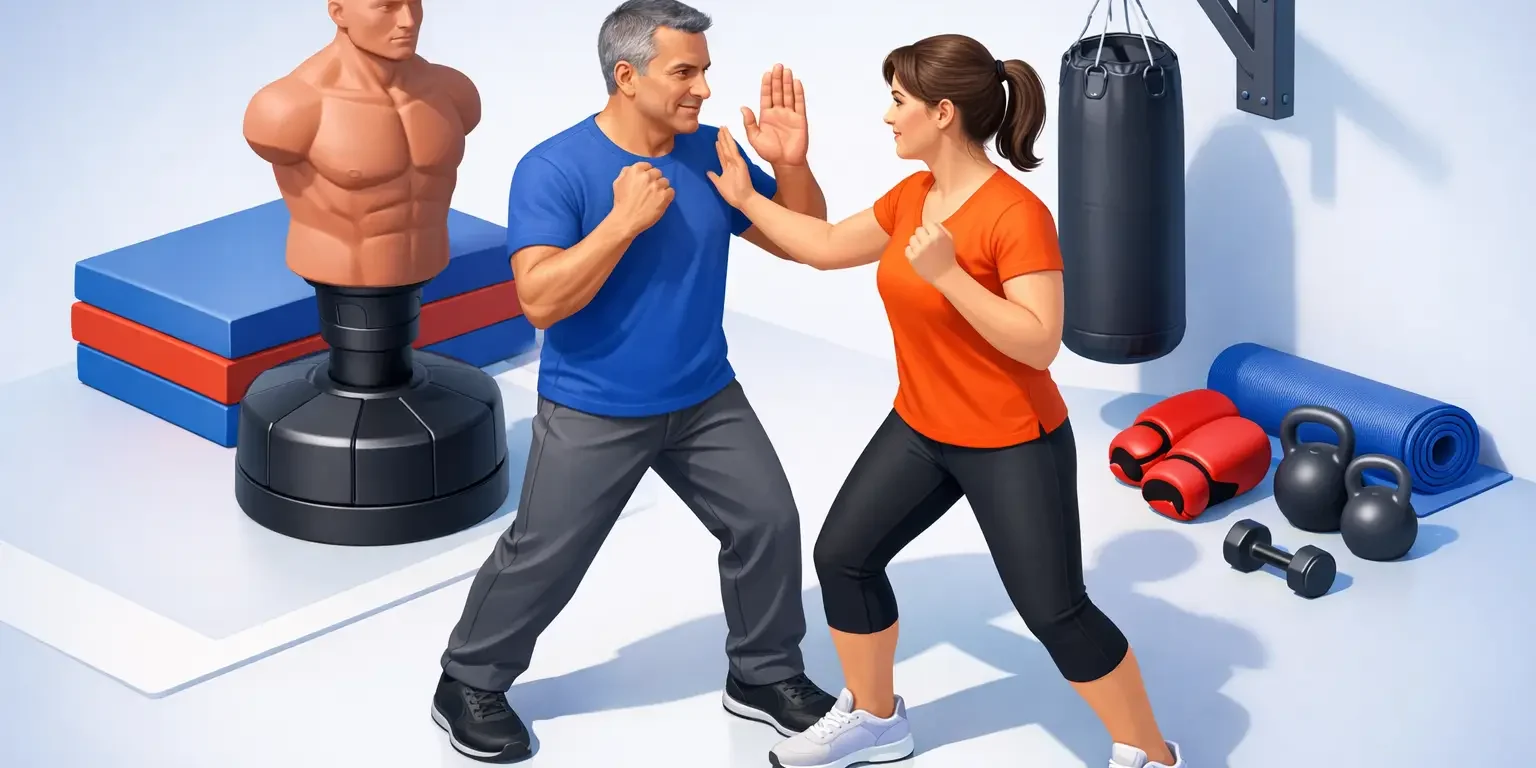
You do not need to be fast, flexible, or naturally coordinated to learn how to protect yourself. Self defense for non athletic adults is not about turning everyday people into fighters. It is about building calm awareness, making safer choices under pressure, and practicing simple responses in a supportive environment until they feel more familiar.
Many adults put off martial arts because they assume everyone else in class will be younger, stronger, or more experienced. A well-run beginner program should feel very different. It should give you a clear starting point, respect your current abilities, and help you make steady progress without asking you to prove anything on day one.
Why Self Defense Is Not an Athletic Contest
Movies often make self-defense look like a test of speed and spectacular technique. Real personal safety is usually much less dramatic. The best outcome is avoiding a dangerous situation, creating space, getting to safety, and contacting help. Physical skills matter, but they are only one part of the picture.
For adults who do not consider themselves athletic, this is encouraging news. Good self-defense training does not rely solely on strength or a perfect fitness level. It teaches you to notice your surroundings, use your voice with confidence, set boundaries, and respond with purpose when a situation becomes unsafe.
Athletic ability can help in many activities, but it is not a requirement for beginning martial arts. Consistency matters more. A student who attends class, listens carefully, and practices a few foundational movements over time can build meaningful confidence and practical ability.
What Non-Athletic Beginners Should Look For
The right class should be structured, welcoming, and realistic about where beginners start. You should not feel pressured to keep up with advanced students or perform skills before you understand them. Instructors should explain the purpose behind drills, offer adjustments when needed, and create a respectful atmosphere where questions are welcome.
Look for training that includes awareness, verbal boundary-setting, basic movement, personal safety habits, and age-appropriate physical self-defense skills. It should also address decision-making. Knowing when to leave, when to seek attention from others, and when to contact authorities is every bit as valuable as learning a physical technique.
A positive school also teaches control. Self-defense is not about starting confrontations or trying to win an argument. It is about protecting yourself and others while using the least amount of force necessary to get away from danger. That principle is especially important for adults who want training that supports confidence without encouraging aggression.
Start With Movement You Can Repeat
Beginners often worry that they will not remember a complicated sequence when they are nervous. That is why quality instruction begins with simple, repeatable movements. Students learn posture, balance, how to move with intention, and how to create distance when someone is too close.
The goal is not flawless performance. The goal is improvement. A small adjustment in balance or body position can make a student feel more stable and capable. Over time, those improvements carry into everyday life, from walking to the car after work to speaking up when a situation feels uncomfortable.
Build Fitness as a Benefit, Not an Entry Requirement
Martial arts can improve stamina, mobility, coordination, and strength. But those benefits develop through training. You do not need to arrive in peak condition to earn them.
A beginner may need extra breaks, lower-impact options, or time to become comfortable with class routines. That is normal. A responsible instructor can help students work at an appropriate pace while still encouraging them to challenge themselves safely. If you have an injury, health concern, or limitation, speak with your healthcare professional and instructor so training can be adapted thoughtfully.
The Confidence That Comes From Practice
Confidence is not pretending that nothing can go wrong. It is knowing you have options. When adults practice safety skills in a controlled setting, unfamiliar situations become less intimidating. They learn that they can use their voice, move with purpose, and make decisions even when they feel nervous.
This confidence often reaches beyond self-defense. Students may notice they stand taller, communicate more clearly, and feel more comfortable taking on new challenges at work, at home, or in their community. Martial arts creates a setting where progress is visible: attend class, learn a skill, practice it, and see yourself improve.
That process matters for adults who have spent years believing they are “not athletic.” Training can replace that label with a more useful one: beginner. Every experienced martial artist was once a beginner, and every small milestone counts.
Self Defense for Non Athletic Adults Requires Good Judgment
No class can promise that a person will always be safe or that one technique will work in every circumstance. Stress, surroundings, size differences, multiple people, and unexpected variables all affect a situation. Honest self-defense instruction prepares students to think, not to rely on false certainty.
Awareness is a practical starting point. Pay attention to entrances and exits, trust discomfort when someone ignores your boundaries, keep your phone accessible when appropriate, and let trusted people know where you are going when circumstances call for it. These habits are not about living in fear. They are about giving yourself more choices.
Verbal skills are another important layer. A clear, firm command can draw attention, communicate a boundary, and sometimes stop a situation before it becomes physical. Practice helps. It can feel awkward to use a strong voice in a classroom at first, but that discomfort can become valuable preparation.
Physical techniques are most useful when they are taught with context. Students should understand that their purpose is to interrupt danger long enough to escape, not to stay and fight. Training should reinforce the importance of getting to a safer location and seeking help as soon as possible.
Why a Supportive Class Environment Matters
A good martial arts school does more than teach movements. It gives adults a place to grow alongside people who are working toward their own goals. Some classmates may be seeking self-defense skills. Others may want better fitness, stress relief, family activity, or a new personal challenge. That variety can make a class feel more welcoming than a competitive gym environment.
At ATA Integrity Martial Arts, teen and adult students train in a structured setting that values respect, self-discipline, and personal progress. Students are encouraged to work hard while honoring their individual starting point. The focus is not on comparing yourself to the person next to you. It is on becoming more prepared, confident, and capable than you were before.
This kind of accountability is valuable. When class becomes part of your weekly routine, practice does not depend on motivation alone. You have instructors, classmates, and a clear path forward. Progress becomes something you build one class at a time.
What Your First Class May Feel Like
Your first class may come with nerves, and that is completely normal. You may wonder where to stand, whether you will remember instructions, or how tired you will feel. Most beginners discover that the hardest part was simply walking through the door.
Expect to learn basic class routines, practice foundational movements, and work at a pace that helps you understand what you are doing. Wear comfortable clothing, arrive ready to listen, and give yourself permission not to know everything. Questions are part of learning.
You do not need a certain body type, athletic background, or previous martial arts experience to begin. You only need a willingness to practice. The goal of the first class is not to be impressive. It is to take the first step toward feeling more prepared in your daily life.
A safer, stronger future rarely starts with a dramatic moment. More often, it starts with one welcoming class, one new skill, and the decision to believe that your ability to grow is still there.