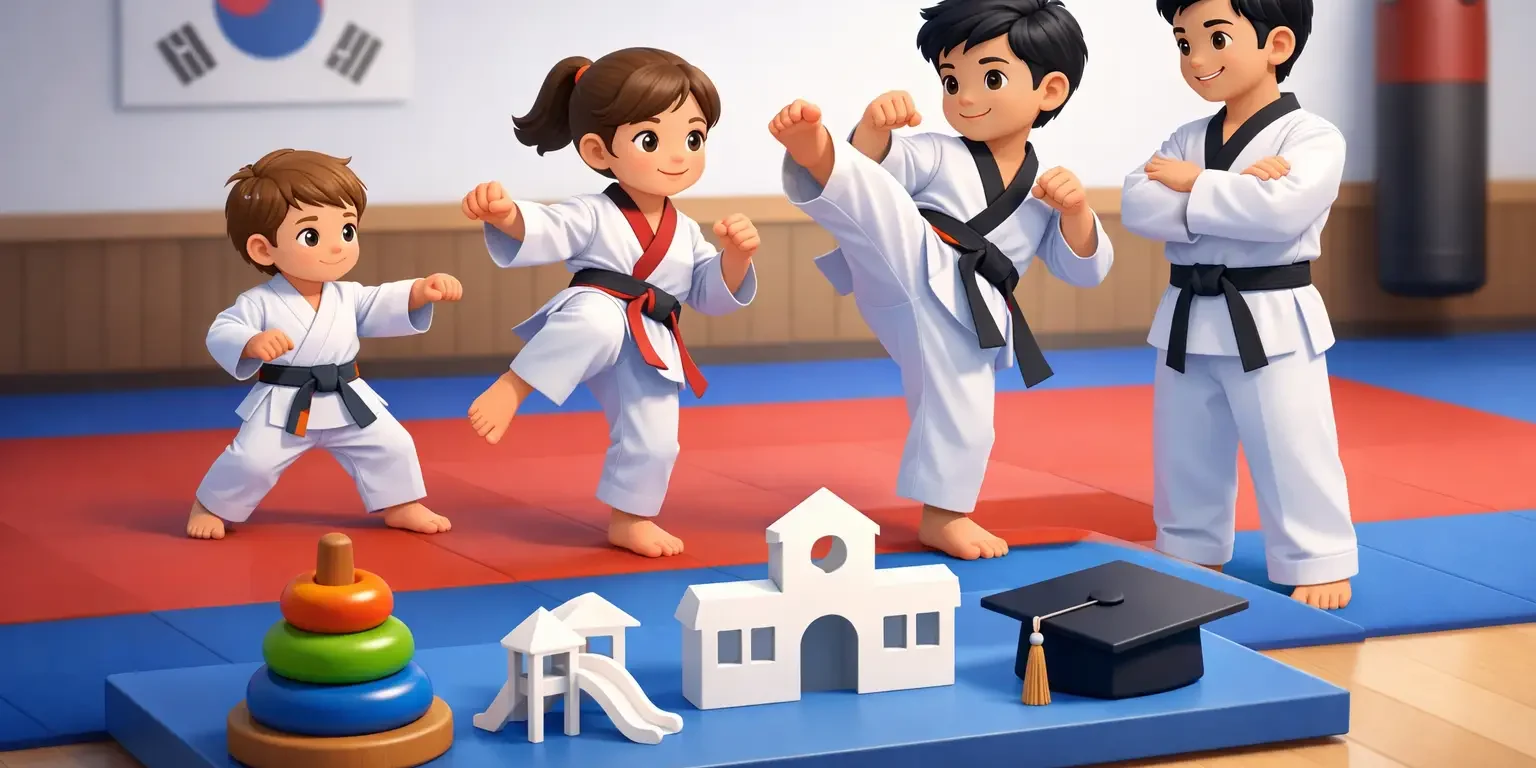
A four-year-old who has trouble waiting for a turn may still be ready for martial arts. A quiet seven-year-old who avoids team sports may be ready, too. When parents ask, “what age should kids start taekwondo?” the best answer is not a single number. It is an age range, a child’s developmental stage, and the quality of the class in front of them.
Taekwondo can give children a positive place to move, listen, practice respect, and feel proud of steady improvement. The right starting point is one where your child can be successful, not overwhelmed. That is why age-appropriate instruction matters as much as enthusiasm.
What Age Should Kids Start Taekwondo Classes?
Many children can begin a structured beginner martial arts program around ages 4 to 6, provided the class is designed specifically for young learners. At this age, children are building body awareness, learning to follow simple directions, and beginning to understand how their choices affect others. A well-run class uses short activities, clear routines, positive reinforcement, and plenty of movement.
For children ages 7 to 12, taekwondo classes can introduce more detailed techniques, longer combinations, goal setting, and a clearer path through belt ranks. These students are often ready to work on focus, perseverance, and responsible independence while still having fun with their classmates.
There is no benefit to starting a child too early in a program that expects them to behave like an older student. Likewise, waiting until a child is perfectly coordinated or completely confident can mean missing an opportunity for them to grow. The goal is to find a class that meets your child where they are.
Ages 4-6: Learning Through Structure and Movement
For younger children, martial arts is less about memorizing complicated forms and more about learning foundational habits. They practice standing in line, responding when an instructor speaks, taking turns, using a strong voice, and controlling their bodies. Those small moments can carry over into preschool, kindergarten, home, and other activities.
A quality program for this age group should feel active and encouraging. Children may work on basic stances, safe kicks, balance, coordination, and simple self-defense awareness, but the larger lesson is self-control. They learn that listening first helps them participate better, that effort earns praise, and that mistakes are part of learning.
Signs a young child may be ready
A child does not need to be naturally athletic to start. It helps if they can separate from a parent for part of a class, follow one- or two-step directions, and participate in a group for a short period. Even if these skills are still developing, a patient instructor can help build them.
Parents should also consider what their child needs most. A child with lots of energy may benefit from a structured outlet. A child who is shy may benefit from low-pressure opportunities to speak up, practice, and earn visible progress. Taekwondo is not a replacement for specialized developmental support when it is needed, but it can be a meaningful part of a child’s growth.
Ages 7-12: Building Confidence That Lasts
Elementary-age children are often ready for a more complete martial arts experience. They can understand why techniques require control, remember longer sequences, and take greater ownership of their goals. Belt progression gives them a practical lesson in patience: advancement comes from consistent attendance, respectful behavior, practice, and improvement over time.
This is also an age when confidence can be easily shaken by school pressures, changing friendships, or fear of failing at something new. Taekwondo offers a healthy answer. Students are not expected to be the strongest or fastest person in the room. They are encouraged to improve from their own starting point.
Physical skills matter, but so do the habits behind them. A child learns to make eye contact when speaking, recover after a difficult drill, respect training partners, and use self-defense only when necessary. Those lessons support a child well beyond the mat.
Readiness Matters More Than a Birthday
Age-based classes create a strong starting point, but every child develops differently. Before enrolling, think about how your child responds to new environments and group activities. A good school will help you make that decision without pressure.
Look for these four signs of readiness:
- Your child shows some interest in trying a new activity, even if they are a little nervous.
- They can participate in a group setting for a reasonable amount of time for their age.
- They are able to practice safe hands, feet, and personal space with reminders.
- They can accept encouragement and redirection from an instructor other than a parent or teacher.
None of these need to be perfect. In fact, many families choose martial arts because their child needs support with listening, focus, confidence, or emotional regulation. The key is choosing an instructor who sees those needs as skills to develop, not reasons to exclude a child.
If your child has an injury, sensory considerations, behavioral concerns, or another health-related need, have a conversation with both their health professional and the martial arts school. A supportive program can often make reasonable adjustments, but clear communication helps everyone create a positive experience.
What Parents Should Look for in a Beginner Program
The first class should feel organized, welcoming, and age appropriate. Children should know where to stand, what is expected of them, and who can help if they feel unsure. Instructors should give directions clearly and correct students in a way that is firm, respectful, and encouraging.
Safety is essential. Beginners need instruction in controlled movement, appropriate contact, personal space, and when not to use martial arts skills. Taekwondo should build confidence without teaching children to seek conflict. The strongest lesson is that self-defense includes awareness, calm decision-making, and finding help from a trusted adult.
Parents should also look beyond a single exciting class. Ask how the program supports long-term progress. Are students recognized for effort as well as achievement? Is there a clear path for growth? Does the school teach respect, discipline, and non-violent conflict resolution alongside physical techniques? Those details determine whether martial arts becomes a short-lived activity or a lasting positive influence.
At ATA Integrity Martial Arts, age-specific programs help younger children develop foundational life skills before moving into more advanced training as they grow. That progression gives families a familiar, supportive place for children to keep building confidence year after year.
What to Expect During the First Few Weeks
The adjustment period is normal. Some children walk onto the mat ready to participate immediately. Others need a few classes to feel comfortable with the routines, uniforms, new terminology, and group setting. A child may come home excited one day and uncertain the next.
Consistency helps. Arriving a few minutes early, using encouraging language, and letting your child know that beginners are expected to learn can make a big difference. Try not to measure success only by how high they kick or how quickly they earn a belt. Notice when they listen after a reminder, return to class after feeling nervous, or show respect to a partner.
For most families, the right age to begin is when a child can join a program built for their stage of development and receive patient guidance along the way. A complimentary introductory class can help you see how your child responds to the environment, the instructor, and the rhythm of a real class. Sometimes the clearest answer comes when they step onto the mat, take their first ready stance, and realize they belong there.