A first taekwondo class should not feel like being thrown into a fight. For a young child, it may begin with learning how to stand at attention, listen for a cue, and practice a simple front kick into the air. For a teen or adult, it may mean learning balanced movement, basic self-defense awareness, and how to train with a partner respectfully. So, is taekwondo safe for beginners? In a well-run school with qualified instructors, age-appropriate classes, and clear expectations, it can be a safe and positive way to build fitness, confidence, and discipline.
Like any physical activity, taekwondo has some risk. Students can get sore, lose balance, or occasionally experience a minor bump or bruise. The goal is not to pretend those possibilities do not exist. The goal is to choose a program that manages risk thoughtfully while teaching students how to move with control, make good decisions, and respect themselves and others.
Is Taekwondo Safe for Beginners When Classes Are Structured?
Structure is one of the biggest reasons beginners can train safely. A quality beginner class is designed for people who are still learning coordination, body awareness, and martial arts rules. Students do not walk in and begin sparring or attempting high-level techniques. They start with fundamentals.
Instructors introduce stances, blocks, punches, kicks, and movement in small steps. They show students where to place their feet, how to keep their hands in a safe position, and how to maintain enough space from classmates. Beginners repeat skills at a manageable pace before adding speed, power, or more challenging combinations.
For children, this structure matters even more. Kids are still developing balance, judgment, and the ability to follow multi-step directions. Age-specific classes allow instructors to set expectations that fit each student’s stage of development. A four-year-old needs a different lesson, class length, and activity level than an eleven-year-old. Teens and adults also benefit from training that meets them where they are, whether they are returning to exercise after years away or trying martial arts for the first time.
At ATA Integrity Martial Arts, the goal is to provide a respectful place where students can start at their own level and progress with purpose. That progression helps students gain confidence without being pressured to perform beyond their readiness.
What Makes a Beginner Taekwondo Class Safer?
Safety comes from daily habits, not just a posted set of rules. A strong martial arts school builds those habits into every class. Students are taught to listen immediately when an instructor gives a command, to keep control of their techniques, and to use martial arts only in appropriate settings.
Look for these signs when evaluating a beginner program:
- Instructors actively supervise the class instead of teaching from across the room.
- Students are grouped by age, experience, or physical size when partner work is introduced.
- Techniques are taught slowly before students practice them with greater speed or power.
- Sparring is introduced gradually, with protective equipment and firm rules.
- Respect, self-control, and non-violent conflict resolution are discussed alongside physical skills.
A good instructor also pays attention to the individual student. Some beginners are naturally cautious, while others are eager to move quickly. Some students need reminders to slow down and keep their balance. Others need encouragement to try a new skill. Effective instruction adjusts without making anyone feel embarrassed for being new.
Sparring Is Not the First Step
Many parents hear the word “martial arts” and picture two students kicking and punching each other. That image can make taekwondo seem more dangerous than it is for a new student. In reality, responsible schools separate basic training from controlled sparring and introduce each phase gradually.
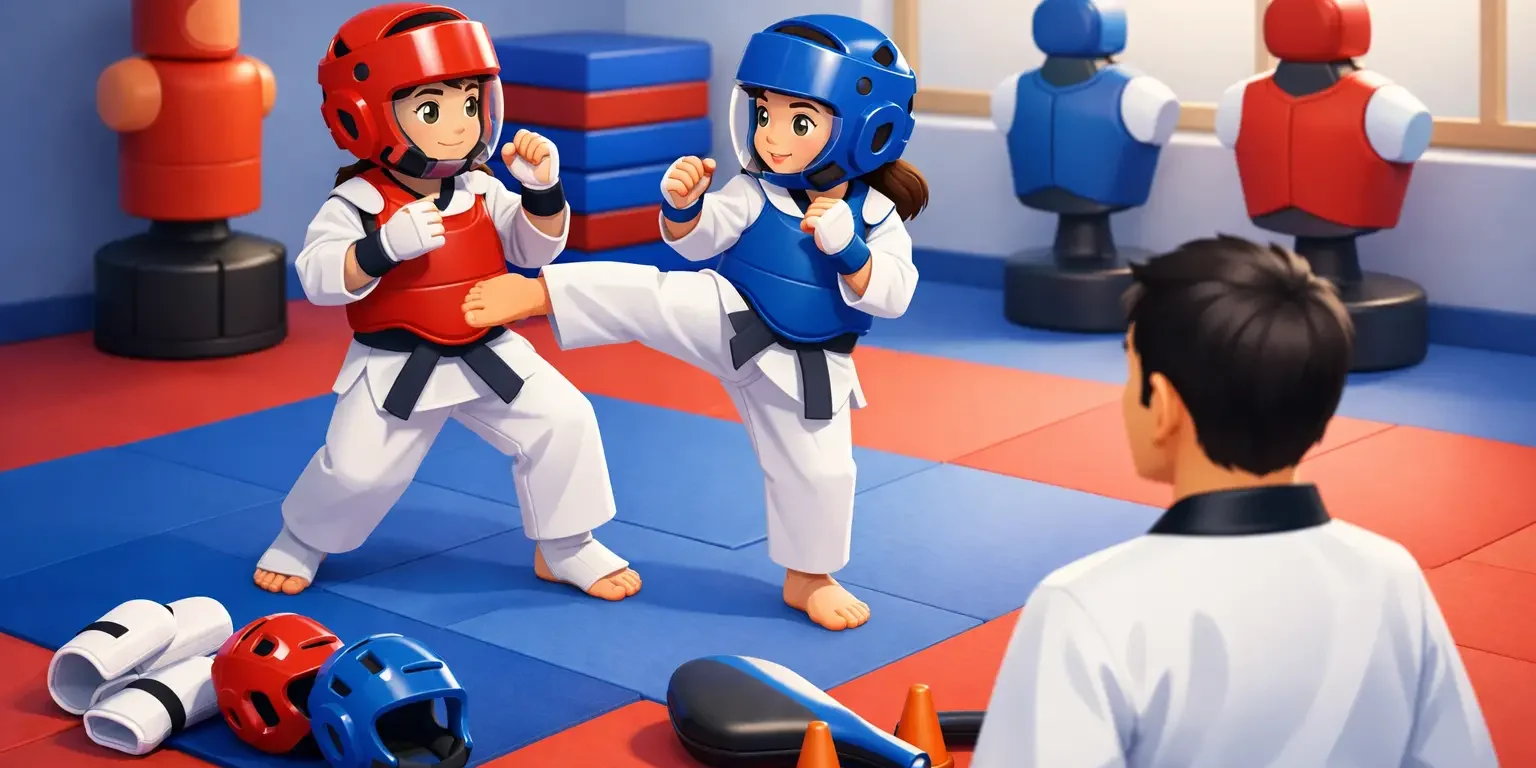
Before a student spars, they should understand how to maintain distance, follow commands, stop immediately, and control the power of their movements. They should also have the proper protective gear when the program calls for it. Equipment may include headgear, hand and foot protection, and other items required by the school’s sparring rules.
Even then, sparring should be supervised and matched thoughtfully. It is not a free-for-all, and it should never be used to intimidate beginners. The purpose is to help students apply timing, awareness, and self-control in a controlled environment. Some students enjoy sparring right away, while others gain confidence through forms, drills, and pad work before they are ready for partner-based activities. Both paths are valid.
Safety Starts Before Class Begins
Families can help make a new student’s taekwondo experience safer and more enjoyable. Arriving a few minutes early gives children time to settle in rather than rushing onto the floor. Comfortable athletic clothing, water, and a willingness to listen go a long way during those first classes.
It is also helpful to tell the instructor about any injuries, health concerns, sensory needs, or physical limitations. That information is not a reason to sit on the sidelines. It gives the instructor a chance to offer appropriate modifications and keep an eye on the student during certain movements. A child recovering from an ankle injury, for example, may need a temporary adjustment to kicking drills. An adult with a stiff knee may need help finding a comfortable stance.
Students should also understand one simple rule: discomfort is not always the same as danger. Muscles may feel tired when someone is learning new movements or becoming more active. Sharp pain, dizziness, or anything that feels wrong should be reported immediately. In a healthy class culture, asking for help is a sign of maturity, not weakness.
The Right School Matters More Than the Style Name
Taekwondo itself is not automatically safe or unsafe. The training environment makes a major difference. Two schools may teach the same general style, yet one may have clear beginner systems, positive coaching, and close supervision while another pushes students too fast or treats control as an afterthought.
When visiting a school, watch how instructors speak to students. Are corrections calm, clear, and encouraging? Do students wait for directions? Is the training floor organized? Are beginners given personal attention? Parents should feel comfortable asking how sparring works, when protective gear is used, and how instructors respond if a student gets hurt.
Pay attention to the atmosphere, too. Martial arts can be challenging without being harsh. A student should leave class feeling proud of an effort, even if a new skill was difficult. Fear of making mistakes is not a healthy teaching tool. Respect, accountability, and positive reinforcement create a stronger foundation for long-term progress.
Benefits That Go Beyond Physical Safety
The safest martial arts training also teaches students how to handle themselves away from the training floor. Taekwondo gives beginners a constructive outlet for energy while reinforcing choices such as listening, staying calm, and walking away from unnecessary conflict.
For children, learning to wait for a turn, follow directions, and recover after a missed kick can strengthen focus and resilience. For teens, training can offer a supportive community and a clear way to work toward goals. Adults often appreciate the combination of practical movement, stress relief, and steady personal progress. Every belt earned represents more than a physical technique. It reflects practice, responsibility, and commitment.
That does not mean taekwondo is the right activity for every person at every moment. A student with a current injury may need medical guidance before participating. A child who is not ready for a group setting may benefit from extra time and support. The right program will have an honest conversation about those needs instead of making unrealistic promises.
A Confident First Step
Beginning taekwondo should feel challenging in the right ways: learning something new, practicing patience, and discovering that effort leads to improvement. When a school prioritizes qualified instruction, age-appropriate progression, controlled partner work, and character development, beginners have room to grow safely.
The best first class is not the one where a student performs perfectly. It is the one where they feel welcomed, learn a new skill, and leave excited to come back and try again.