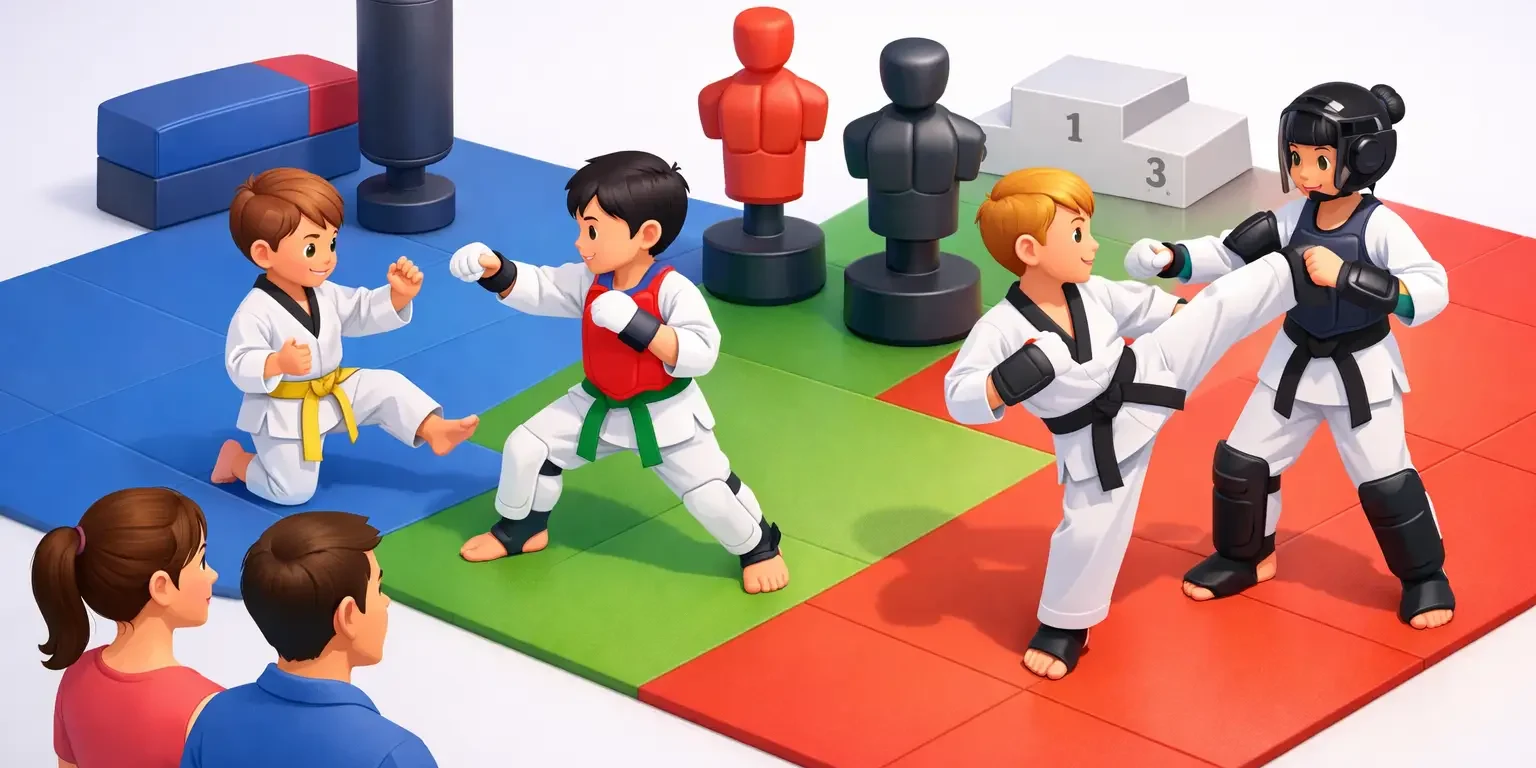
A four-year-old does not need the same martial arts experience as a middle school student, and neither needs the same training as an adult beginning self-defense. That is the central idea behind this guide to age appropriate taekwondo: the best program meets a student where they are, then gives them a clear path to grow.
For families, age-appropriate training is about more than choosing a class based on a number. It means finding instruction that matches a student’s physical coordination, attention span, social development, and personal goals. When those pieces fit, students are more likely to enjoy class, build lasting confidence, and keep progressing.
Why Age-Appropriate Taekwondo Matters
Taekwondo teaches valuable skills at every stage of life: respect, focus, self-control, confidence, fitness, and practical awareness. But the way those lessons are taught should change as students mature.
Young children learn best through movement, simple directions, repetition, and positive encouragement. They need a class that feels active and fun while quietly teaching the habits parents want to see at home and school. Older children are ready for more detailed technique, goal setting, and the responsibility that comes with rank advancement. Teens and adults can work more deeply on fitness, self-defense, stress management, and personal discipline.
Putting every age into the same teaching approach can create frustration. A child may feel overwhelmed by long explanations, while a teen may lose interest in activities designed for preschoolers. Age-specific programs make room for each student to succeed without lowering expectations.
Ages 4-6: Building Focus Through Movement
For preschool and kindergarten-age children, martial arts should develop foundational skills before expecting polished technique. At this age, students are still learning how to listen to a coach, wait for a turn, follow a sequence, and manage big feelings when something is difficult.
A quality early-childhood taekwondo class uses short, clear instructions and frequent movement. Students might practice basic stances, simple blocks, controlled kicks, balance exercises, and age-safe obstacle activities. The purpose is not to turn a five-year-old into an advanced fighter. It is to help them discover that they can pay attention, try again, and make positive choices.
Character education belongs naturally in this setting. A child who learns to say “yes, ma’am” or “yes, sir,” keep hands to themselves, and listen before acting is practicing skills that matter far beyond the training floor. Parents often notice improvements in confidence, manners, coordination, and willingness to follow directions.
Look for instructors who know how to redirect rather than shame. Young children will get distracted. They may need reminders. The right environment is structured and consistent, but still warm enough that students feel safe trying something new.
Ages 7-12: A Stronger Foundation for Kids
Elementary-age students can begin to connect effort with progress. They are often ready for more formal taekwondo patterns, combinations, partner drills, and rank requirements. This is an excellent age to build the habits of goal setting and steady practice.
A well-designed kids program should balance physical challenge with clear instruction. Students need to understand not only what to do, but why it matters. For example, practicing a defensive stance can become a lesson in awareness and personal space. Preparing for a belt test can teach children how to break a large goal into smaller steps.
This age group also benefits from a healthy definition of confidence. Real confidence is not being the loudest person in the room or never making mistakes. It is knowing how to stay calm, work through a challenge, and treat others with respect. Martial arts gives children regular chances to practice that kind of confidence in a supportive group.
Parents should ask how a school handles partner work and competition. Sparring and controlled contact can be valuable when introduced at the right pace, with safety equipment, close supervision, and clear rules. It should never be used to pressure a child who is not yet ready. Good instruction teaches control first, because martial arts is about discipline, not aggression.
A Guide to Age Appropriate Taekwondo for Teens
Teenagers often come to taekwondo for different reasons. Some want practical self-defense skills. Others want a fitness routine, a break from screens, a way to manage stress, or a community outside school. Many benefit from all of the above.
Teen classes should respect their growing independence while maintaining meaningful standards. Students can handle more technical instruction, stronger conditioning, more advanced forms, and thoughtful conversations about situational awareness and non-violent conflict resolution. They should understand that self-defense begins with attention, boundaries, and avoiding unnecessary danger whenever possible.
The social environment matters greatly during the teen years. A martial arts school can be a place where students are known by name, held accountable, and encouraged without being embarrassed. That combination is especially helpful for teens who may not feel drawn to traditional team sports or intimidating fitness spaces.
Rank progression gives teens a long-term goal, but it should not be the only goal. The deeper value is learning to show up consistently, accept coaching, and continue after a difficult class or disappointing day. Those are life skills that carry into school, work, relationships, and future responsibilities.
Adults: Practical Skills and a Sustainable Routine
Adults do not need prior martial arts experience to start. In fact, beginner-friendly instruction is one of the most important signs of a healthy adult program. New students should be able to learn at a manageable pace, build conditioning gradually, and ask questions without feeling out of place.
For adults, age-appropriate training also means recognizing different starting points. A college student focused on fitness may train differently from a parent returning to exercise after several years. An adult with an old knee injury may need modifications for certain kicks or stances. The goal is not to compare yourself to the person beside you. The goal is consistent, safe progress.
A strong adult taekwondo program teaches usable self-defense principles while developing balance, flexibility, coordination, and cardiovascular fitness. It also offers a productive way to release stress. After a day of work and family responsibilities, practicing forms or striking pads can provide a focused reset.
Family participation can make consistency easier. When parents and children train in the same school, they share goals, encourage each other, and see firsthand what the other is learning. They may not always take the same class, but they can be part of the same positive community.
What Parents Should Look for in a Program
The right class should feel organized from the moment you walk in. Watch how instructors greet students, manage transitions, correct mistakes, and recognize effort. A school can be energetic and fun without becoming chaotic.
Ask whether classes are divided by developmental stage, not simply crowded together for convenience. Find out how the school introduces contact drills, what safety practices are in place, and how instructors adapt for beginners. Clear answers are reassuring because they show that student well-being comes before appearances.
It is also worth looking beyond kicks and belts. Does the curriculum reinforce respect, perseverance, listening skills, and responsible decision-making? Are students encouraged to solve conflicts peacefully? Is progress earned through attendance, effort, and demonstrated skills rather than handed out automatically? These details help families choose a program with real long-term value.
At ATA Integrity Martial Arts, age-based programs are designed to give each student an appropriate challenge in a positive, respectful setting. From young children developing focus to adults pursuing self-defense and fitness, every student can start with the basics and move forward with purpose.
When a Student Is Ready to Move Up
Age ranges are helpful, but readiness is individual. Some children are physically coordinated but still need time to develop focus. Others may be eager for more challenge before they reach the next listed age group. The best decision comes from observing the student, listening to instructor feedback, and avoiding the urge to rush progress.
A student is often ready for a new level when they can follow directions consistently, participate safely with others, recover from corrections, and show genuine interest in learning more. Moving up should feel motivating, not like a test a child is afraid to fail.
The most meaningful martial arts journey is not measured by how quickly someone earns a belt. It is measured by the quiet changes that appear over time: a child who speaks with more confidence, a teen who handles pressure with maturity, or an adult who realizes they are stronger and more capable than they believed. Start with a class that fits today, and let steady practice shape what comes next.