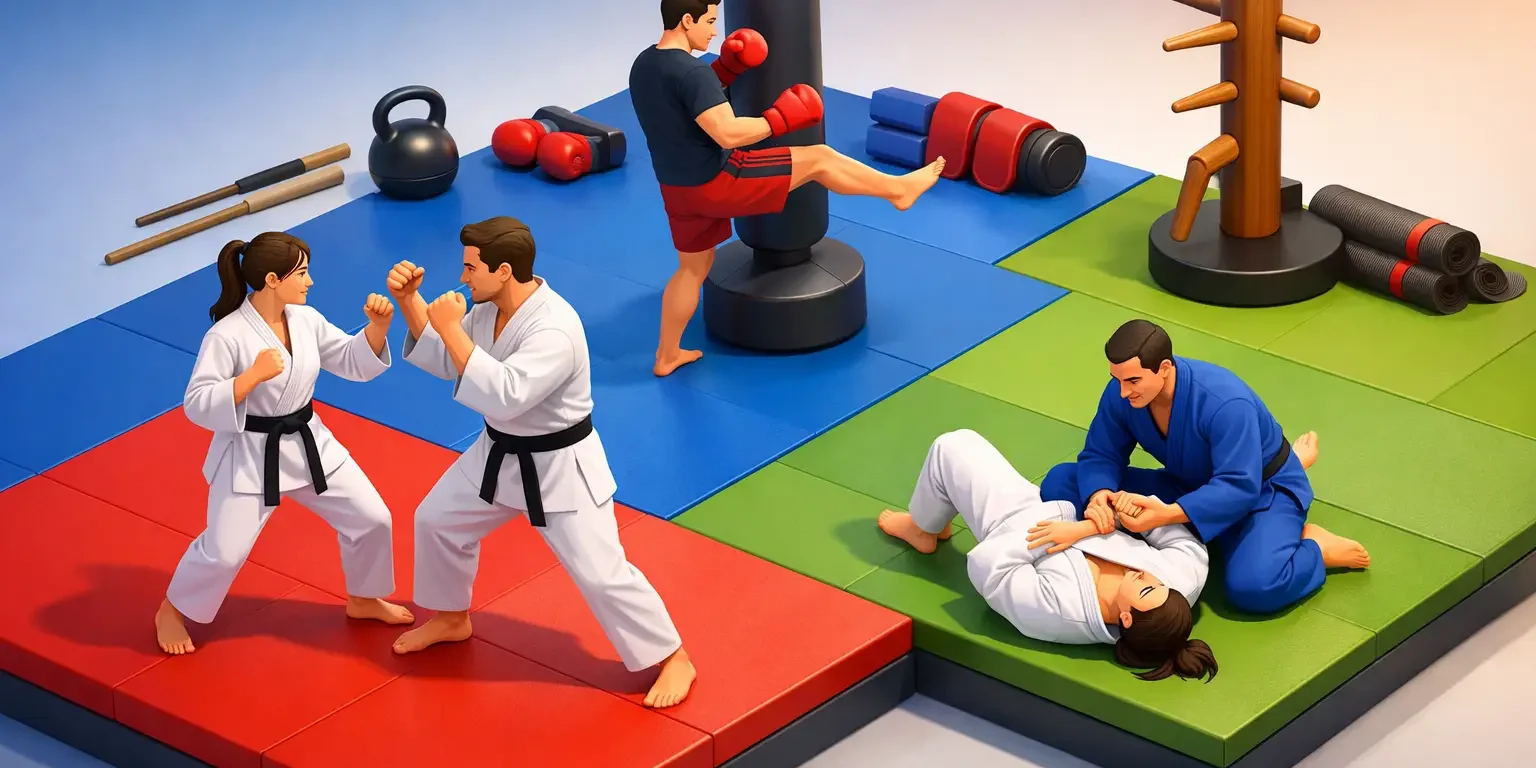
Walking into a martial arts school for the first time can feel like a bigger challenge than the workout itself. You may wonder whether everyone else will be more experienced, whether you are “in shape enough,” or whether you will know what to do. The good news is that beginner martial arts for adults is designed to meet you where you are – not where you think you should be.
A quality adult martial arts program gives you a clear place to begin. You do not need prior athletic experience, flexibility, or a background in fighting. You only need the willingness to learn, practice, and keep showing up. For many adults in Kalamazoo, that first class becomes the start of a healthier routine, stronger self-confidence, and a more focused approach to everyday life.
Why Adults Start Martial Arts
People begin martial arts for different reasons. Some want practical self-defense skills. Others are looking for an engaging way to get active after years of putting fitness on hold. Many adults simply want a constructive challenge outside of work, school, and family responsibilities.
Martial arts is different from a typical gym workout because it gives your effort a purpose. Rather than repeating exercises without a clear goal, you learn skills step by step. Each class builds on the last, from basic stances and movement to controlled strikes, blocks, and self-defense techniques. As you improve, you can see and feel your progress.
That progress matters beyond the mat. Training asks you to listen carefully, set goals, manage frustration, and practice with consistency. Those are life skills, not just martial arts skills. Adults often find that the discipline they develop in class carries into their work, relationships, and personal goals.
What Beginner Martial Arts for Adults Should Feel Like
A beginner-friendly class should be structured, welcoming, and appropriately challenging. You should expect to work hard, but you should not feel pressured to prove yourself or keep pace with someone who has trained for years.
In a well-run class, instructors explain techniques clearly and demonstrate them before asking students to practice. Students work on fundamentals at a pace that supports safe learning. The goal is not to throw a beginner into advanced sparring or complicated combinations. The goal is to help each student develop good habits from the start.
You can also expect a respectful training environment. Martial arts is built on discipline, but discipline is not intimidation. It means treating instructors and training partners with respect, following directions, practicing control, and being accountable for your effort. A positive school makes room for questions and encourages progress without embarrassment.
Your first class will focus on foundations
Most adult beginners start with movements that may look simple but require attention: how to stand with balance, how to move with control, how to protect yourself, and how to strike safely. These basics create the foundation for everything that comes next.
You may also practice combinations, light conditioning, and partner drills. Partner work should be controlled and supervised, especially for new students. Martial arts training is not about hurting another person. It is about learning awareness, technique, restraint, and the ability to respond appropriately if a situation requires self-defense.
Choosing the Right Style and School
There is no single best martial art for every adult. The right program depends on your goals, physical condition, schedule, and what kind of environment will motivate you to stay consistent.
If your primary goal is self-defense, look for a curriculum that teaches awareness, distance, movement, controlled striking, and practical responses to common situations. If fitness is your main focus, find classes that keep you moving while still teaching meaningful skills. If you are drawn to long-term achievement, a belt-ranking system can provide clear milestones and a rewarding sense of progression.
The school matters as much as the style. Visit or try a class before making a decision. Pay attention to how instructors speak to beginners, how students treat each other, and whether the class feels organized. A good school should make expectations clear, offer instruction that is appropriate for adults, and create an atmosphere where people can train seriously without feeling unwelcome.
Ask practical questions, too. Is the class schedule realistic for your life? Are instructors trained to work with students at different experience levels? Is there a clear path for progress? The best program is not necessarily the most intense one. It is the one you can attend consistently and feel proud to be part of.
The Benefits Go Beyond Fitness
Martial arts can absolutely improve strength, coordination, flexibility, and cardiovascular health. But its value is often deeper than the physical changes. Adults who train regularly build confidence through evidence: they learn a skill, practice it, and discover they can do more than they expected.
That confidence is not about becoming aggressive. In fact, quality martial arts instruction emphasizes non-violent conflict resolution and self-control. Knowing you have the ability to protect yourself can help you carry yourself with more calm and awareness. The goal is always to avoid danger when possible and use physical skills responsibly.
Training can also be a valuable outlet for stress. After a demanding day, focusing on a sequence of techniques or a challenging drill can help quiet the mental noise. You are not checking emails or thinking through tomorrow’s to-do list. You are present, moving, learning, and giving your attention to the moment.
For adults who spend much of the day sitting, martial arts also brings variety back into exercise. You will work on balance, mobility, coordination, and controlled power instead of doing the same routine every week. It stays interesting because there is always another skill to refine.
Common Concerns New Adult Students Have
“I am too old to start” is one of the most common worries, and it is rarely true. Adults begin martial arts at many ages. Your training should be adapted to your current ability, not compared to someone else’s starting point. If you have an injury, limited mobility, or a health concern, talk with your physician and your instructor so appropriate adjustments can be made.
Another concern is fitness level. You do not need to get fit before joining a martial arts class. Training is one way to build fitness. You may feel challenged at first, and that is normal. The important thing is to begin at a sustainable pace and let your conditioning improve over time.
Some beginners also worry that martial arts means constant fighting. In reality, responsible programs place a strong emphasis on safety, control, and respect. Sparring, if included, is usually introduced gradually after students have learned foundational skills. It should never feel like an uncontrolled test of toughness.
How to Make Your First Months Count
Consistency matters more than intensity. Two focused classes each week will usually take you further than one exhausting session followed by several weeks away. Put class times on your calendar and treat them like an appointment with yourself.
Give yourself permission to be new. You will not remember every detail after one class, and you do not need to. Ask questions, practice the basics, and notice the small improvements: better balance, a sharper technique, more confidence speaking up, or simply feeling less winded than you did last month.
It also helps to set a personal reason for training. Maybe you want to feel safer when walking to your car. Maybe you want more energy to keep up with your children. Maybe you miss having a goal that is entirely your own. Your reason will help you stay committed when life gets busy.
At ATA Integrity Martial Arts, adult students train in a structured environment that values practical skills, personal growth, and respectful community. You do not have to be an expert to begin. You just need a place that will help you take the next step with confidence.
Starting martial arts as an adult is not about catching up to anyone else. It is about choosing a challenge that strengthens your body, sharpens your focus, and reminds you that progress is still available at every stage of life.